Bhuj is located in the heart of Kutch, Gujarat, and is a mix of history, culture, handicrafts, architecture, and desert landscape. This city isn’t only a city; it’s an energetic door to one of the most important conduits of culture and visual grandeur in India. Bhuj has magic in its sand and legendary warriors in its history; the 2001 earthquake scarred it, but it has risen from the rubble to become a soulful destination celebrating resilience, heritage and beauty.
Bhuj, with all its history, art, and remoteness, has something inherently cool about it. Here, I take a deep dive into the visit places of Bhuj and around that make your trip unforgettable.
Best Places to Visit in Bhuj
Aina Mahal – The Palace of Mirrors
The Aina Mahal, or the Palace of Mirrors, one of the most iconic landmarks of Bhuj, is a glorious display of Indo-European architecture. This palace was built in the mid-18th century by Rao Lakhpatji with grand mirror work, Venetian glass and decorative tiles, attributed to the renowned craftsman Ram Singh Malam.
There is an impressive collection of antique clocks, glassware, paintings, and royal artefacts on the inside, properly reflecting the luxurious lifestyle of Kutch royalty. Despite the earthquake, its historical charm has survived the restoration of parts of it.
Prag Mahal – Gothic Grandeur in the Desert
The presence of the magnificent Prag Mahal next to the Aina Mahal is very significant, as it was constructed in the 19th century by Rao Pragmalji II. One of the palaces notable for its Italian Gothic architecture includes Corinthian pillars, a durbar hall, a clock tower and a balcony which has a panoramic view of Bhuj.
The earthquake badly damaged much of the palace, but a good part has been restored, and wandering through the arched corridors seems to take you back. It has become one of those places where the architecture speaks to you, and the storytelling also meets it in the most majestic way.
Kutch Museum – The Cultural Treasury
The Kutch Museum is the oldest museum in Gujarat and among the five best places to learn about the ethnographic and tribal culture of Kutch. It was established in 1877. There is, from ancient coins and inscriptions to sculptures, tribal musical instruments and embroidery—a great collection that narrates the tale of the different heritage of the region.
The textile and costume sections of the museum are very interesting because of the detailed embroidery and mirrored work for which Kutch is known.
Bhujodi Village – The Weaver’s Paradise
Bhujodi, is a traditional village which also acts as a living museum of textile craftsmanship, located just 8km southeast of Bhuj. Vankar (weaver) community, the inhabitants of this village has an exquisite the handwoven shawls, stoles and other fabrics.
Artisans in Hiralaxmi Memorial Craft Park demonstrate their techniques of weaving in front of visitors, enabling the visitors to see the process and even to join if they wish. It is a very personal shopping experience because you can purchase authentic Kutchi handicrafts straight from the weavers.
Vande Mataram Memorial – A Tribute to India’s Freedom
Vande Mataram Memorial is found on the outskirts of Bhuj in Bhujodi, it is a colossal patriotic complex, created to remember the great leaders of India’s fight for freedom. Life size sculptors, galleries and 4D presentations of various well known historical events of India are housed here.
This attraction draws on its grand architecture modelled on the Indian Parliament House and immersing exhibits that bring history to life. A must visit for all ages, the visit is educational and emotionally stirring at the same time.
Hamirsar Lake – Tranquility in the Heart of the City
The serene Hamirsar Lake is located at the center of Bhuj and is a part of the metropolitan landscape. According to Wikipedia, historically, it was a water source to the city and owed its name to Rao Hamir, one of the early rulers of Bhuj.
The lake attracts chance visitors and the locals for morning walks, picnics or just to relax at the lake. The sunset can be caught from the promenade around the lake and the monsoons make the lake extremely lively with birds flocking the area and lotuses in bloom.
Bhujia Fort – The Sentinel of Bhuj
The Bhujia Fort is situated atop the Bhujia Hill, which provides a panoramic view of the city and the plains in general. This fort was built in early 18th century by Rao Godji I, which was strategically important during invasions and conflicts.
Ruins of the fort now stand, but tell a tale of battles and valour, though its ramparts, bastions and watchtowers stand ruined. Moreover, it is rewarding to climb to top, be it during sunrise or sunset when the golden hues of Kutch desert tents its way across the horizon.
Mandvi Beach & Vijay Vilas Palace – A Day Trip Delight
A coastal town, Mandvi is two-hours away by road from Bhuj and famed for the golden beaches and the magnificent Vijay Vilas Palace. Built in 1929, the palace was built in a blend of Rajput architecture and colonial style which includes marble jaalis, domes and verandas. It was also used as a shooting location for a number of Bollywood films.
A relaxing day away from the city is provided by camel rides, water sports, and local food stalls at Mandvi Beach.
Kalo Dungar – The Black Hill of Mysteries
About 90 km from Bhuj, Kalo Dungar or The Black Hill is the highest point in Kutch. The view of the Great Rann of Kutch, glistening endlessly to the horizon, can be enjoyed from the summit.
The region in which Kalo Dungar is situated is well known for a particular phenomenon whereby if you put a car into neutral, it starts rolling uphill; something endlessly interesting for those who travel here.
Chattardi – The Royal Cenotaphs of Bhuj
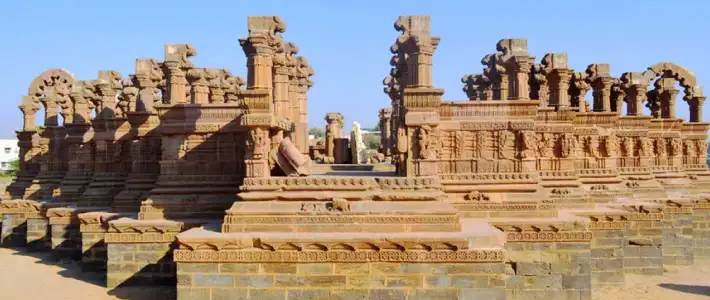
Not a very well known place but like any other haunted or not so haunted Kutch destination, Chattardi is a group of royal cenotaphs or memorials they were built to honour the rulers of Kutch. These sandstone structures of intricately carved domes and arches are found in a peaceful open field.
With almost all the other structures of Kutch royalty in ruins, these two have been spared, just partially damaged structure, their architectural brilliance shines through. The ideal place for some photography or quiet contemplation.
Best Time to Visit Bhuj
Since the weather is typically pleasant during this season, from October to March is the perfect time to visit Bhuj. It is also the time of celebrated Rann Utsav, in the nearby White Desert, wherein Kutch’s culture flourishes to its fullest.
How to Reach Bhuj
By Air: Bhuj Airport also has flights from major cities such as Mumbai and Ahmedabad.
By Train: It is a well linked railway station on a national scale and nicely links it to other parts of India.
By Road: Buses and Private Taxis are the mean of transport and connect Bhuj with different cities like, Rajkot, Ahmedabad, Mandvi, etc.
Conclusion:
Bhuj is not one city but a living museum of Kutch’s history and traditions. Pass by mirror work on Aina Mahal, watch artisans weave stories into fabric in Bhujodi, stand on top of Bhujia Fort with the wind in your hair and every bit of Bhuj is steeped with rawness and zest.
Here, ruins tell stories, artisans weweave legacies, and every sunset tells a new story. Pack your bags, open your mind and start our Bhuj experience, one at a time.