Description
Jaisalmer Tourism: Traditional Cuisine and Local Delicacies
The Indian town Jaisalmer exists as the "Golden City" in the Thar Desert desert heart of Rajasthan. Due to its architectural use of golden-yellow sandstone, the city acquired its nickname and develops its entire town into a golden reflection when the sun sets. The town of Jaisalmer emerged in 1156 AD through the leadership of Rawal Jaisal who established this Rajput stronghold which maintains both histor...
ical medieval value and cultural and desert living traditions. The city acquired historical prominence because of its important position on the ancient Silk Route trading routes.
Jaisalmer Fort
The greatest landmark of Jaisalmer stands as the Jaisalmer Fort which people refer to as both Sonar Quila and Golden Fort. The Indian fort of this type stands out because residents continue to inhabit its walls. Rawal Jaisal completed the fort construction in 1156 AD when he designed the bastion from yellow sandstone to shine brightly under sunlit conditions. Visitors who step inside this place discover historical temples as well as many havelis and shops and homes that demonstrate how the city has preserved its cultural heritage throughout the ages.
Architectural Marvels
India boasts numerous exceptional traditional mansions located in the city of Jaisalmer. Wealthy merchants during the 18th and 19th centuries constructed these magnificent structures that feature intricate carving as well as latticed windows alongside noble architectural frontages. People often visit Patwon Ki Haveli to see its five havelis featuring elaborate balconies and mirror decoration while Salim Singh Ki Haveli stands out because of its peacock design and Nathmal Ki Haveli has a distinct beauty because two brothers merged different architectural styles into one mansion.
Cultural Events and the Jaisalmer Desert Festival
Jaisalmer organizes the Desert Festival in February for global tourists to visit each year. For three days the cultural event brings together inhabitants to watch camel races while conducting turban-tying competitions alongside puppet shows along with musical performances. Throughout the festival participants can see all the components that define Rajasthan's desert identity through the lens of traditional cultural events.
Jain Temples
Jaisalmer Fort contains an ensemble of Jain temples that were constructed across a span of four centuries from 12th to 16th century. Several temples honoring different Tirthankaras exist throughout the area because they were constructed from yellow sandstone like the Dilwara Temples do but with the same level of detailed carvings. The religious facilities in Jaisalmer serve as both sacred worship spaces and artistic masterpieces that represent the profound Jain spiritual heritage of the community.
Gadisar Lake
During the 14th century Maharawal Gadsi Singh built Gadisar Lake as a tank for water conservation which ensured the availability of fresh water in the city. Gadisar Lake now functions as a well-visited tourist destination that showcases its natural splendor together with its sacred temples as well as peaceful sanctuaries situated nearby the lake. Both sunrise and sunset boating on the lake create a peaceful atmosphere which becomes even more alluring with the presence of seasonal migratory birds.
Local Markets and Handicrafts
Visitors who want to buy Rajasthan items can find numerous options at Jaisalmer’s active marketplaces. Handicraft products crafted in the local region can be found in three markets of Jaisalmer - Sadar Bazaar and Pansari Bazaar and Bhatia Bazaar - including embroidered clothing, mirror-worked purses and silver jewelry, camel leather creations, puppets and wood carvings. Shopping in this locality transcends normal commercial activity because visitors can interact directly with local artisans to observe their classic techniques.
Traditional Cuisine of Jaisalmer
The food trends in Jaisalmer reflect the strong and tasty essence which is quite like living in the desert. Tasting some traditional Rajasthani specialties like Ker Sangri, Gatte ki Sabzi, Dal Baati Churma, Bajra Roti (& of course Murg-e-Subz) has be an integral part of every trip to Jaisalmer. Twigs, dried pulses, dried fruit and spices (spiced curd) comprise the main ingredients since water and green vegetables are unavailable in desert regions. Two traditional sweets called Ghotua Ladoo and Mawa Kachori complete the meal perfectly.
Adventure Activities and Desert Experiences
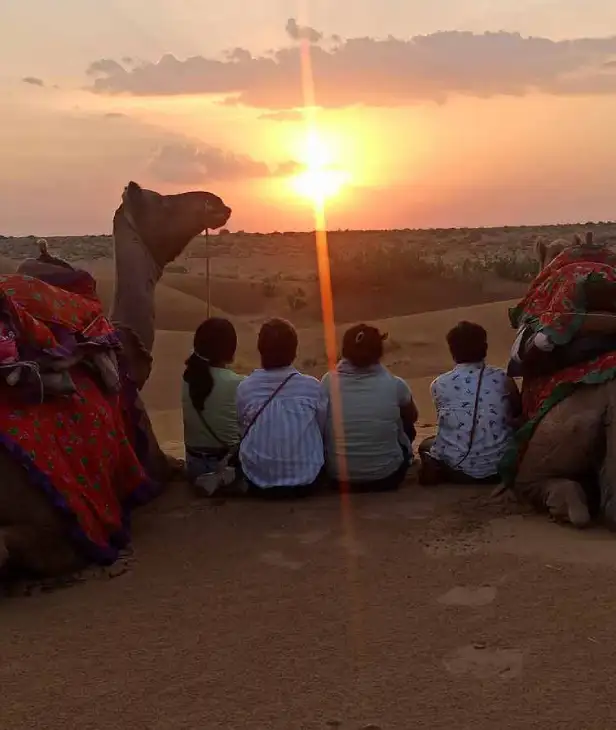
Apart from cultural engagement, there are two exciting things that Jaisalmer gives visitors. Apart from observing the clear air and the midnight sky, visitors have the choice to go paragliding or desert camping together with paramotor flights. The luxurious tents that compose the accommodation of the desert camps are so authentic that they will take you back to the camp life, but with all the comforts one needs. Currently, adventure tourism in Rajasthan look to flourish right because of the adrenaline inducing tasks of Jaisalmer.
Museums and Historical Exhibits
The Jaisalmer War Museum exhibits about Indian Armed Forces with knowledge about Indo Pak wars, is visit for tourists on their interests and knowledge of historical background of the city. It also features some ancient coins, ancient textiles, and other regional weapons and fossil discoveries among its collection on showcase in the Government Museum.
Architectural Simplicity of Desert Villages
Despite, its main city Jaisalmer holds its charm with the help of the near by desert villages Khuri, Kuldhara and Lodhruva. The villages allow the people to know how the Rajasthani folk lives. Due to its haunted reputation, Kuldhara village became an abandoned settlement, well known for being a spooky one. Lodhruva was a prosperous city of old times, historical temples along with ruined establishments reminding of disappeared times.
Filming and Artistic Influence
Jaisalmer’s one of a kind landscape and items heritage have combined to attract film makers and benevolent creators for a considerable length of time. At the same time there are emblematic motion pictures ‘Sonar Kella’ by Satyajit Ray and also scenes from ‘Hum Dil De Chuke Sanam’ and ‘Sarfarosh’ which shot in Jaisalmer. It makes Jaisalmer accessible to international visitors as a peculiar environment for historical setting as well as desert setting story.
Hospitality and Local Traditions
The generous hospitality and the tradition observed by the people of Jaisalmer are upheld by the family members of Jaisalmer in alive form. The tourists then come in contact with the local inhabitants wearing vibrant head wear along with ghagras by sharing homemade food and shared personal stories as well as sharing traditional stories. Guests in guesthouses or desert camps in the home of the resident get a chance to have an authentic sense of the local lifestyle.
Accessibility and Transportation
Although it is set in a remote corner, Jaisalmer is very well connected by road and air and by train with the rest of India. Services of the Railway Station at Jaisalmer let you visit Delhi, Jaipur and Jodhpur destinations. The upgraded Jaisalmer Airport is in use by civilian passengers for flights connecting major cities in India during the tourist season. For travelers wishing to enjoy the changing scenery of the desert, Jaisalmer can only be accessed through scenic routes originating either from Jodhpur or Bikaner.
Responsible and Sustainable Tourism
Now the campaign for sustainable tourism in Jaisalmer involves protecting the delicate desert ecosystem maintaining better water supply and reducing plastic pollution. In order to come to Jaisalmer, guests must support local businesses, respect particular cultural norms and plan and book tours and accommodations that have minimal environmental impact.
Conclusion
Jaisalmer is a living historical document sculpted by stone and sand materials by the locals. This is what makes Jaisalmer interesting for its double character because, on the one side, it has a highly impressive golden fort and on the other side the silence continued by squeaking stretches of dunes, a contrast of vibrant serenity with timeless ancient charm. As the city of Jaisalmer has so much to offer to the citizens, there are many options that are available to them to experience unforgeable tours of Rajasthan’s golden heart be it that of heritage lovers, adventure seekers, and those having a thing for culture. It is culturally historic with great landscape and hospitality that has made it a prestigious jewel in India’s tourism sector.
Best Time to Visit
Jaisalmer is located right in the heart of the Thar Desert in Rajasthan and is fondly called as the "Golden City" of India. Jaisalmer, featured with honey hued sandstone of its architectu...
Summer Season
Temperature Range: 25°C to 45°C Peak Heat: May and June Jaisalmer is extremely hot and dry d...
Monsoon Season
Temperature Range: 20°C to 35°C Best Month: August The rain is very less in Jaisalmer—the av...
Winter Season
Temperature Range: 5°C to 25°C Best Months: November to February There is no doubt that the...
How to Reach
In the Indian state of Rajasthan, Jaisalmer is a magnificent golden gem that is tucked away in the middle of the Thar Desert. Jaisalmer is famous for its yellow sandstone architecture, ma...
By Air
Jaisalmer Airport (JSA): Limited Yet Functional
Al...
By Train
Jaisalmer Railway Station: Well Connected and Affordable
Train is t...
By Road
A Road Trip Through the Desert
Traveling to Jaisalmer by road is an...
Things to do in Jaisalmer
Jaisalmer is named after Maharaja Jaisal Singh; Jaisalmer is the most popular historical place in Rajasthan. It is located amid the expansive Thar Desert, and the city is known for its rich heritage, traditions, and cultures. Exhilarating adventure sports, thrilling safaris, and camping are only...